The following is an excerpt of an article that was originally published in the Animal Behaviour.
The authors of this special issue present concise descriptions of a selection of vertebrates forming ‘societies’, in the specific sense of long-lasting, clear-cut groups. More specifically, the members must distinguish one another from outsiders, a requirement that prioritizes the animals’ capacity to identify others over the patterns of cooperation that can emerge in varied ways within or between the groups, so formed. The authors were asked if the well-defined groups of their species retain ultimate control over a physical space, a possible additional criterion for a society as a territory-holding group that proved problematic for some taxa. Here I reflect on the variability of the societies represented by these essays, including the diverse ways these groups might maintain dominion over an area, as promising subjects for future research.
The colonies of many social insects (notably termites, ants and some bees and wasps) have long been known to fit these criteria. I chose to concentrate on vertebrates given that insect societies are widely recognized and largely well understood; because of limitations in space, I have been selective even there, leaving out primates since the societies (troops or communities) of monkeys and apes have been far more commonly discussed than those of most other vertebrate groups. Indeed, mammals have the best-established examples of vertebrate societies, many of which are known by common names such as the pack, clan, troop or pride (although ‘pride’ is ambiguous for African lions, Panthera leo, referring as it can to adult males and females with their cubs, a lion ‘society’ sensu this issue, or to the lionesses exclusively: Packer, 2026, in this Special Issue). Hence I have made it a point to include a fish, a reptile and two birds, taxa for which the ‘closed’ societies conceived of here are less appreciated and generally understudied.
[…]
Mark Moffett is a research associate in the Department of Entomology at the National Museum of Natural History in the Smithsonian Institution. He is also the author of The Human Swarm: How Our Societies Arise, Thrive, and Fall (Basic Books, 2019).
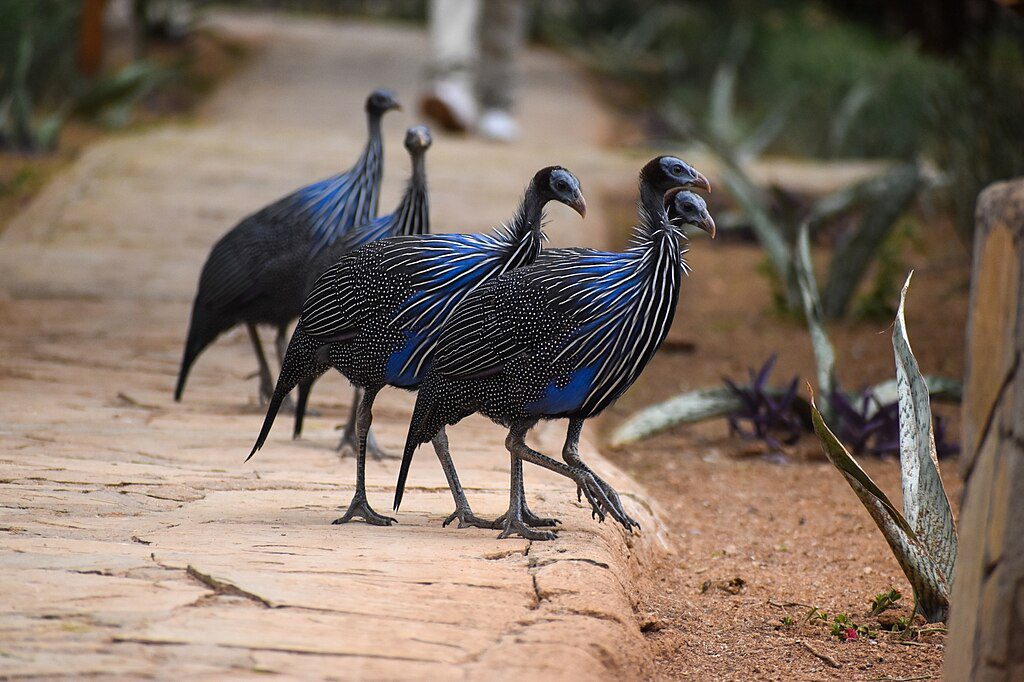
Photo Credit: Nikhil R R via Wikimedia Commons